
Škoda RS Electric Vehicles
Mature Technology, Comfort, and Rational Sportiness
I first became familiar with Škoda electric vehicles more than four years ago, when I had the opportunity to test the then-brand-new Škoda Enyaq. Since then, Škoda’s electric lineup has not only clearly matured but also expanded significantly: Enyaq has received updates and a facelift, while a more compact model – Škoda Elroq – has joined the range.
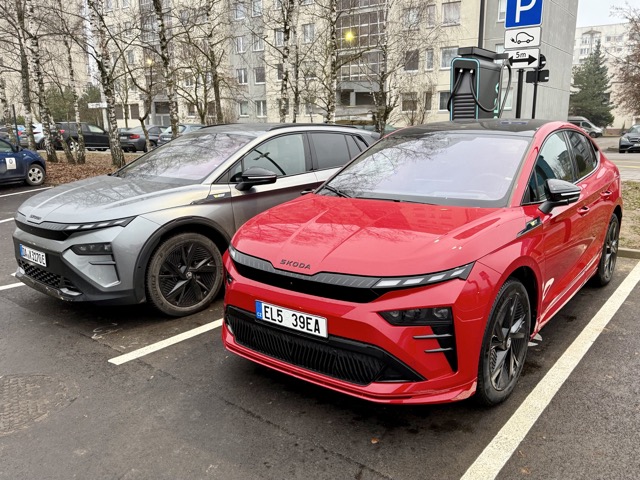
Spending two full weekends with the updated Škoda Enyaq Coupé RS and Škoda Elroq RS therefore became an excellent opportunity to evaluate where Škoda EVs stand today – not in theory or spec sheets, but in real, everyday use.
MEB Platform: Familiar, Predictable, and Still Highly Competitive
Both models are built on the Volkswagen Group’s MEB platform. I know this platform very well, as I have been driving a Volkswagen ID.4 GTX daily for nearly three years. As a result, the suspension behavior, on-road dynamics, and overall driving feel were familiar and predictable – and in this context, that is a compliment, not a criticism.
Over nearly five years, the MEB platform has not changed radically, yet it still delivers exactly what is expected from a modern EV: stability, comfort, and excellent use of space. It is no coincidence that after extensive testing and consideration, I chose this technology for my own car almost three years ago.
Enyaq and Elroq: Different Sizes, Surprisingly Similar Space
The Škoda Elroq is around 17 cm shorter than the Enyaq, but once inside, the difference is far less noticeable than one might expect. The reason is simple – both models share the same wheelbase.
This means passenger space is very similar both in the front and in the rear. Of course, there are compromises: the Elroq has a smaller boot, and taller rear passengers will feel slightly less comfortable. Overall, however, both Enyaq and Elroq are spacious, practical, and perfectly suitable for everyday use.
RS Versions: Enough Sportiness – Anything More Would Be Excessive
The tested Škoda Enyaq RS and Škoda Elroq RS stand out not only through their more aggressive design but also through clear technical upgrades. Even the standard MEB suspension leaves a strong impression, but the adaptive suspension fitted to the RS versions elevates ride comfort and stability to another level. The difference is not dramatic, but it is noticeable – especially during more dynamic driving or on longer journeys, where the car adapts better to road conditions and driving style.
The increase in power is even more apparent. The additional ~40 hp in the RS versions, compared to my 2023 Volkswagen ID.4 GTX, is clearly felt in real driving. Pressing the accelerator in both the Enyaq RS and Elroq RS delivers the same sensation: quick, confident, and very smooth acceleration that fully lives up to the RS badge.
0–100 km/h in 5.4 seconds is more than sufficient even for drivers who enjoy a sporty driving style. Honestly, any additional power would be difficult to exploit in everyday conditions. Škoda has found a very precise balance here – enough sportiness in acceleration, suspension behavior, and handling, without sacrificing comfort or rationality.
RS Without Compromising Driving Range
One interesting and often overlooked detail is that while standard Enyaq and Elroq versions come with a 77 kWh battery, the RS variants receive an additional 2 kWh. On paper this seems minor, but in real life it plays an important role – it helps ensure that increased power does not come at the expense of driving range.
As a result, both RS and non-RS versions realistically achieve around 450–470 km of range, which is an impressive figure for electric vehicles of this size and performance level. This once again shows that RS is not just a visual or emotional package – it is a technically well-thought-out solution that does not force drivers to choose between performance and practicality.
Interior Quality: Škoda Quietly Competing in a Higher League
Even during my first experience with a Škoda EV four years ago, the interior material quality made a strong impression. That impression remains today. Even compared to Volkswagen models, Škoda’s interior feels more solid, more mature, and more comfort-oriented.
There is also a very important subjective factor – the feeling of sitting in a more expensive car than the price list suggests. In this respect, Škoda EVs can easily appeal even to drivers who previously owned higher-class or premium vehicles.
Winter Charging: Finally Without Compromises
I have openly complained more than once about slow winter charging speeds in my Volkswagen ID.4, for a very specific reason: my version lacks battery preconditioning. This feature appeared only a few months after I received my car and has still not been added via software updates.
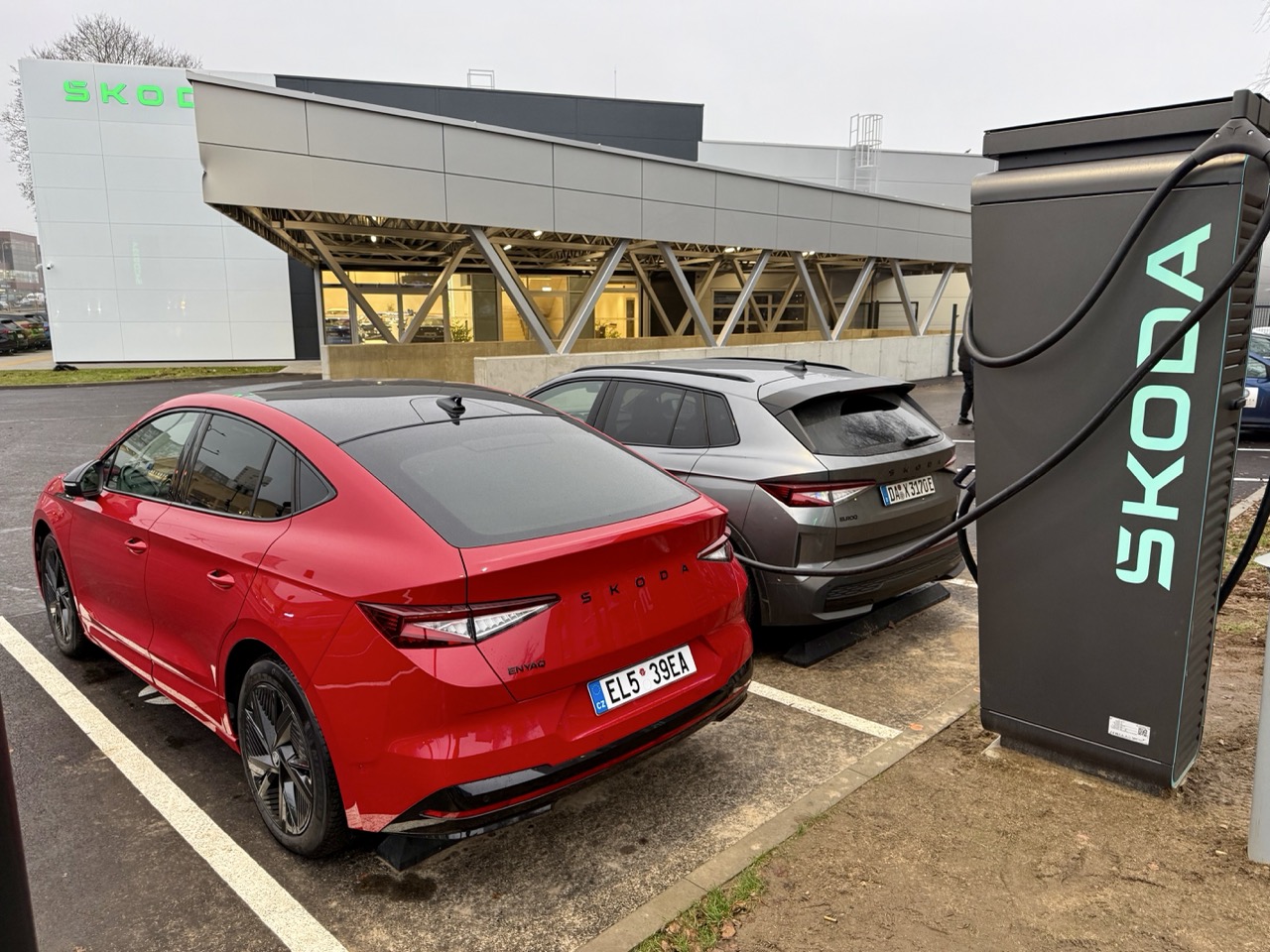
With the Enyaq RS and Elroq RS, the situation is completely different. Battery preconditioning can be activated manually with a few button presses while driving toward a fast charger. Even in winter conditions, I was able to achieve charging speeds close to 180 kW.
8-9 minutes for 100 km of range, these are the numbers that fundamentally change the winter EV experience. With charging speeds like this, living with an electric car in winter becomes entirely normal, without stress or excessive waiting.
Driver Assistance Systems: Among the Best on the Market
Finally, the driver assistance systems deserve mention. They work exactly as they should. Since they are identical to those I use daily in my ID.4 GTX, I can confidently say this is not marketing hype. I rely on them every day – sometimes perhaps too much – and they operate reliably, predictably, and smoothly.
In this area, the Volkswagen Group remains among the market leaders, and Škoda packages these technologies in a very balanced, rational, and user-friendly way.
Which One to Choose – Enyaq or Elroq?
The answer is simple: it depends on your needs.
If you have a larger family, travel longer distances frequently, and need more space, Enyaq is the more rational choice. If most driving is urban or short-distance, Elroq becomes a very attractive alternative – especially considering the price difference of around €10,000, while the technological level and driving experience remain very similar.
Compare yourself - Skoda Elroq RS 2025 vs Skoda Enyaq Coupe RS 2025
Short Summary
Škoda electric vehicles today are mature, well-balanced EVs offering real comfort, sufficient sportiness, high interior quality, and – most importantly – solutions to problems that not long ago raised serious questions about electric mobility.
If you are looking for an EV that “just works” without drama, Škoda is currently one of the strongest contenders on the market.
Other articles in this category: EV News , or by tags: #BESTEV4ME, #Tadas_Ratkevicius